


Everything You Need to Know about Solar Inverters for Home

As the never-ending struggle for cost-effective, green and renewable energy grows more desperate, thanks to the increasingly unstable climate and depleting resources, the demand for solar panels is bound to see a bump, especially in the residential context.
Yes, in the face of rising energy costs, many homeowners are now looking toward alternate sources of power. If you too belong to that merry band, it’s important to know that you’ll also need devices such as a solar inverter for home as a part of the setup.
As a matter of fact, a solar inverter is crucial to the assembly as much as the panels.
To help you familiarize yourself, here’s an in-depth guide on these essential devices.
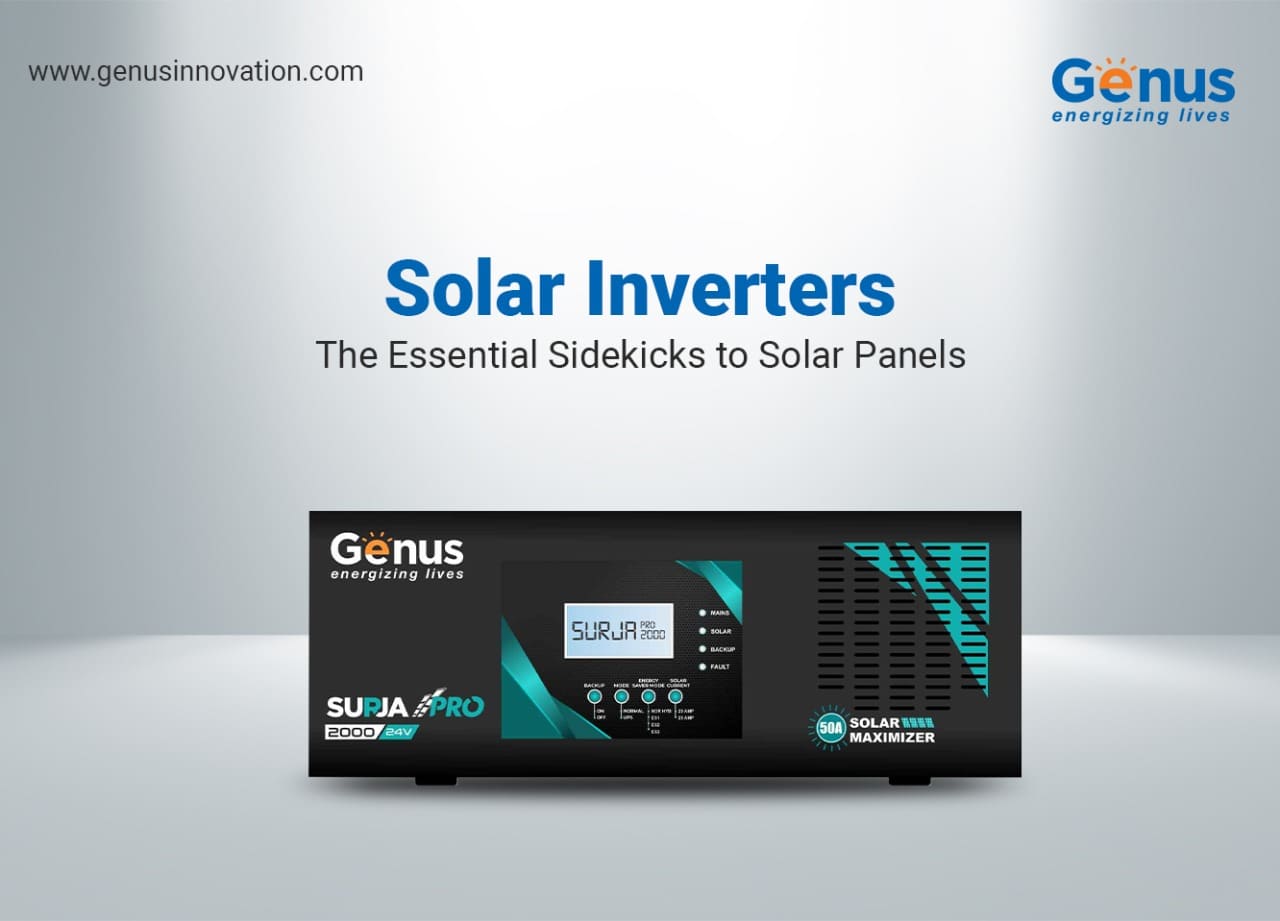
What is a Solar Home Inverter?
In a solar power setup, the panels generate electricity by converting the incoming energy from the photons into electric current. However, most homes are rated for AC (alternating current) power supply. And the power that panels generate is in DC (direct current) form. This supply mismatch needs to be rectified by a sort of middleman, which in the case of a solar power setup, is your solar inverter. To reiterate, it converts the DC supply from the solar panels into a device-friendly AC supply, which allows you to run your household appliances via the energy from the sun. The how is where it gets a bit technical. But for all intents and purposes, a solar inverter employs two transistors that switch polarity rapidly, which imparts the alternating property to the DC supply.Types of the Solar Home Inverters
Here are some of the common types of solar inverters:-
Battery Inverters
-
Hybrid Inverters
-
Central Inverters
-
Microinverters
-
String inverters


