


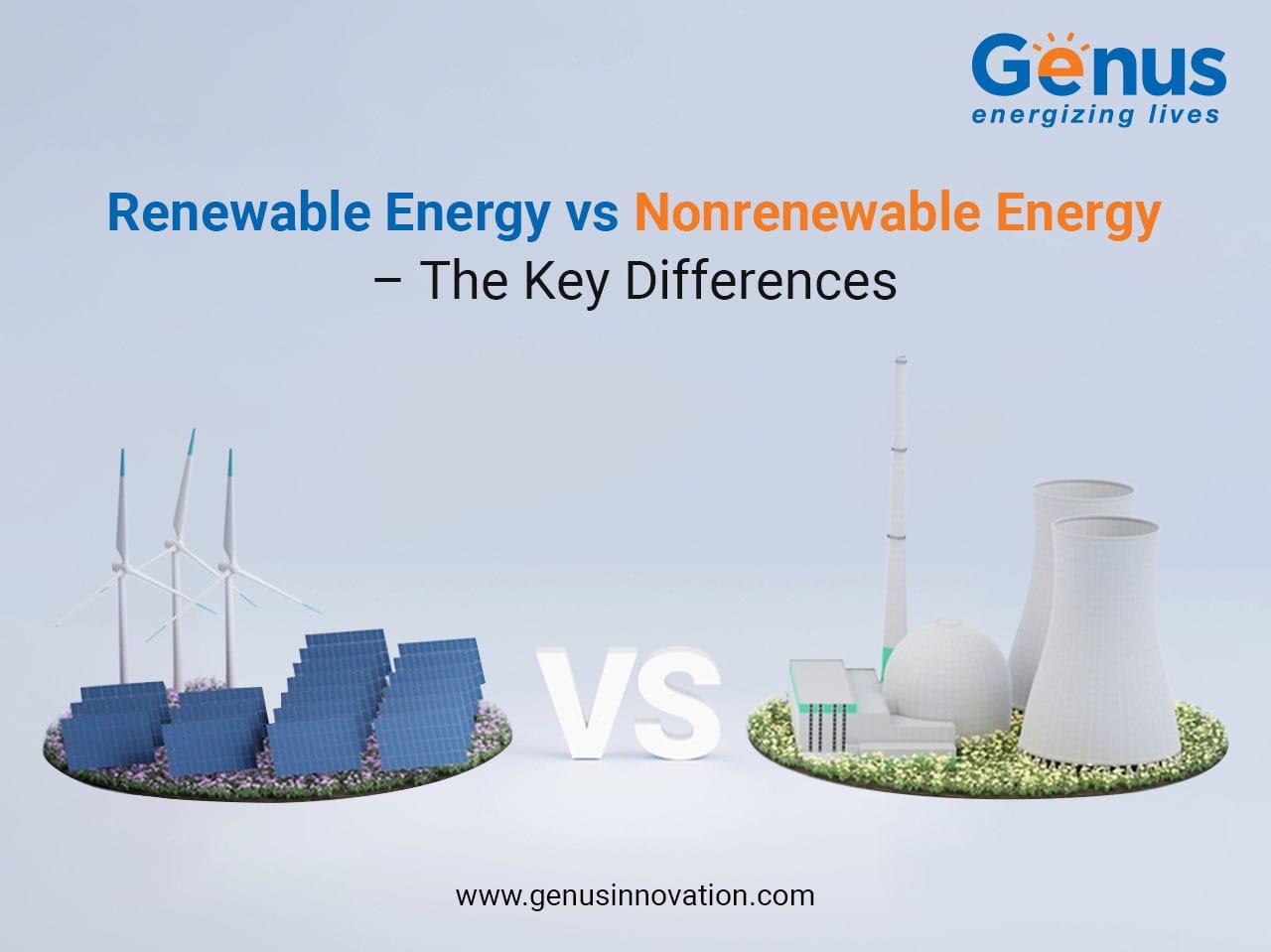
Renewable Energy vs. Nonrenewable Energy – The Key Differences

Green energy, clean energy, sustainable energy – these terms are nothing but alternative ways to refer to renewable energy. The number of aliases flying around the point toward the apparent urgency surrounding the adoption of this energy resource. And to appreciate the full value of these energy resources, it’s important to know the difference between renewable energy vs. nonrenewable energy.
So, here are some important points of difference between renewable and non-renewable energy.
What are Renewable Energy Resources?
Renewable energy resources can’t be depleted or exhausted over time even after continuous utilization. Examples of renewable energy resources include solar energy, wind energy, tidal energy, geothermal energy, etc. The most convenient of them all is solar energy, which is witnessing a fast rise among residential and commercial ecosystems, thanks to the rise of innovation in solar panels and solar charge controller.What are Non-Renewable Energy Resources?
Resources that can’t be immediately replaced upon depletion, and which take time to replenish are known as non-renewable resources. Fossil fuels like petrol, natural gas, and coal are some examples of non-renewable energy resources.Renewable Energy vs. Nonrenewable Energy
Here are some of the prominent points of differences between renewable energy vs. nonrenewable energy:- Environmental Impact
- Cost
- Time to Replenish


